Structure of the IELTS exam
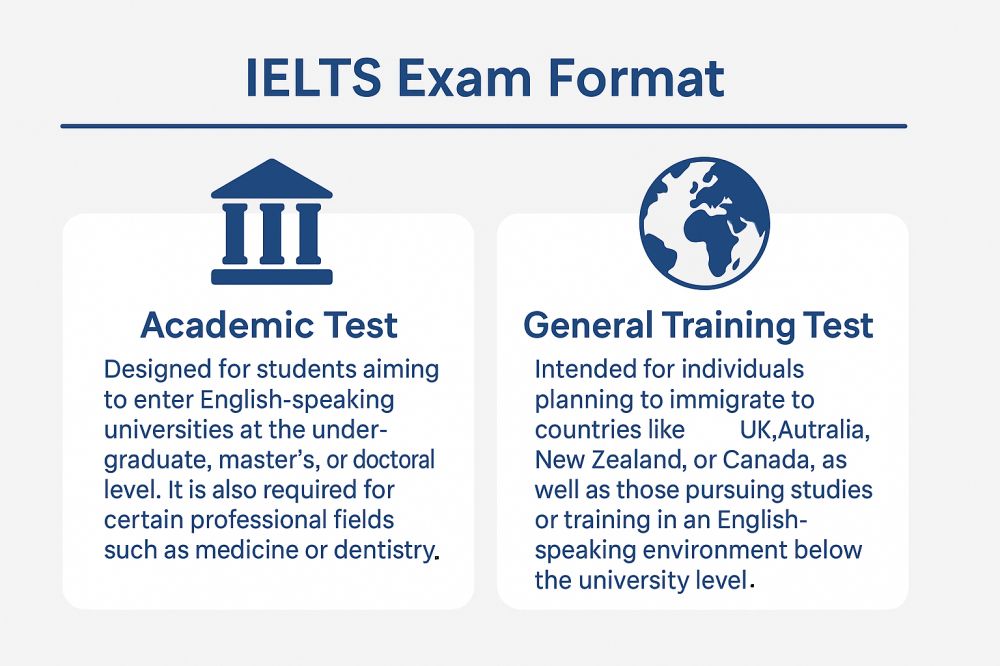
The IELTS exam follows a consistent format:
- the Reading, Writing, and Listening components together last 60 minutes,
- while the Speaking test takes between 11 and 14 minutes.
Reading: In both the Academic and General Training versions, candidates must demonstrate the ability to identify key ideas, extract essential details, understand overall meaning, recognize the writer’s perspective, and summarize arguments effectively.
Writing: Responses are assessed across several criteria, including how well the task question is addressed, the appropriateness of language style, and the clarity of idea organization. Examiners also evaluate grammar accuracy, vocabulary range, and the use of cohesive devices to link sentences and paragraphs.
Listening: The test consists of four recordings: two set in everyday social situations and two in academic or educational contexts. These may include conversations, discussions, or monologues, and they feature a range of English accents.
Speaking: Candidates are evaluated on their ability to communicate ideas clearly and naturally. Assessment focuses on relevance and depth of answers, grammatical control, vocabulary use, pronunciation, intonation, and overall fluency.
IELTS scores
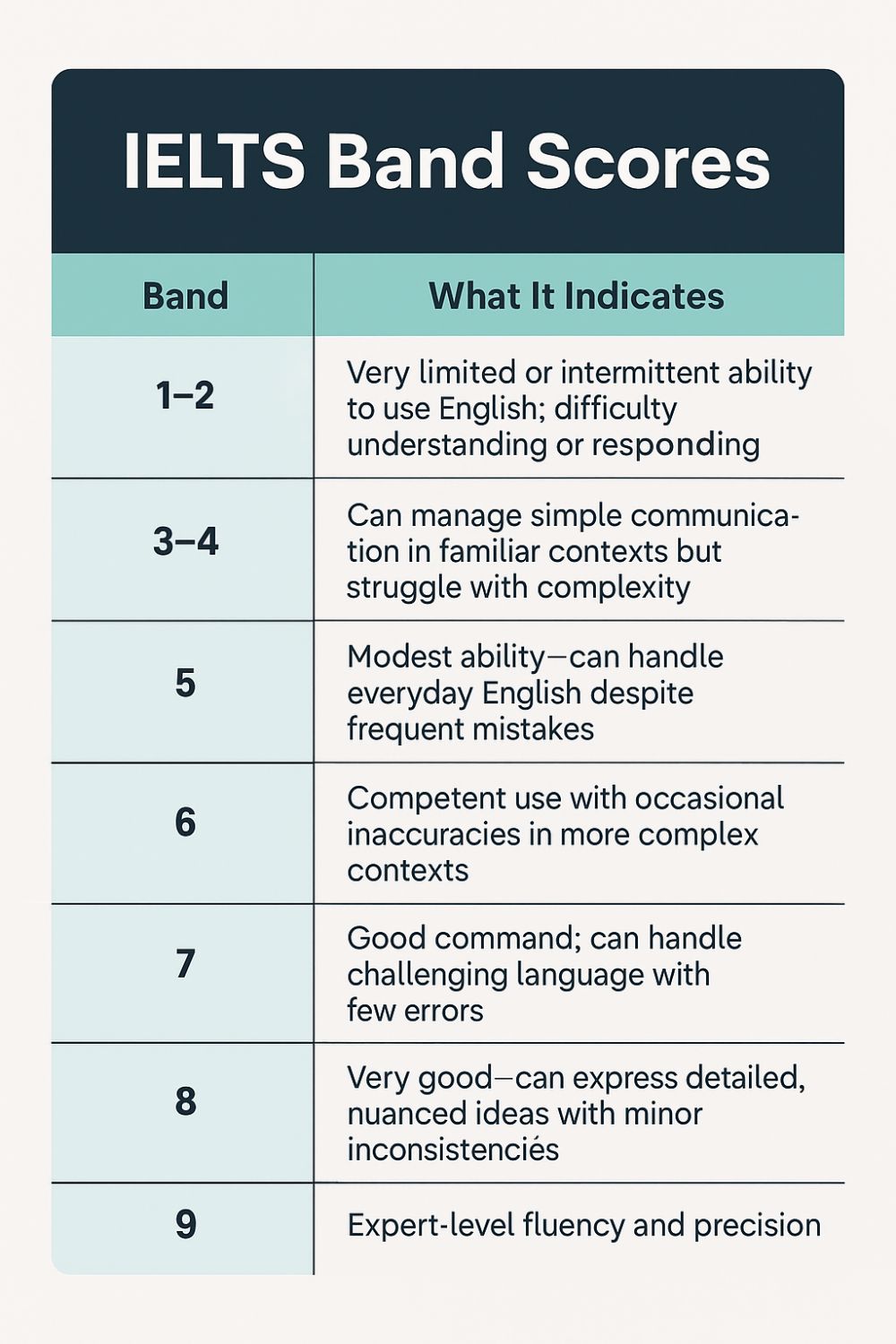
IELTS uses bands from 1 to 9, plus 0 if you didn’t attempt the test. Band 1 represents a non-user, while Band 9 denotes an expert user. Scores above two years old might be invalid; check specifics for where you’re applying.
You receive separate scores for Listening, Reading, Writing, and Speaking. The overall score is the average of these four, rounded to the nearest half band.
For example: (6.5 + 5.5 + 6.0 + 6.5) ÷ 4 = 6.125 → 6.0 overall.
While many learners with only a basic command of English manage to complete the IELTS successfully, their scores often plateau around Band 5.5 or 6. Achieving higher results, however, is far from effortless.
Reaching beyond Band 6 requires real dedication, consistent practice, and a strategic approach. For those who push through the challenge, earning a Band 7 or above is not only rewarding but also a powerful testament to their hard work and progress!
Go to IELTS Preparation now


 Learning English in Toronto is more than just studying grammar or learn more vocabulary; it's a unique experience about meeting new people from around the world, building confidence in speaking Englis... Read content